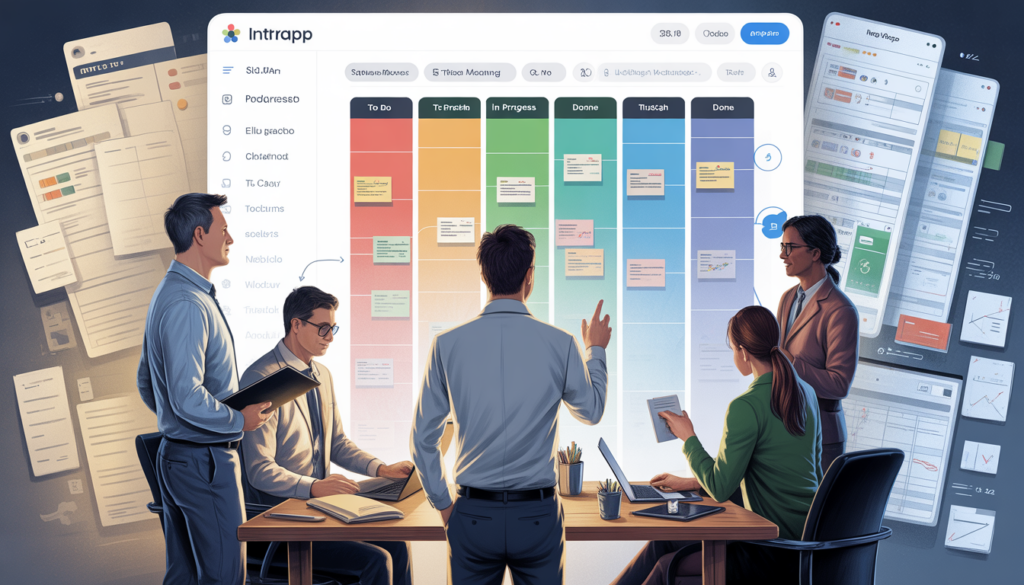

Almost every small and medium-sized business starts with Excel.
Customer lists.
Project tracking.
Quotes and pricing.
Follow-ups.
Reports.
At the beginning, it works.
But as the company grows, the system slowly starts to fall apart.
1. Excel is not a system
Excel is a spreadsheet tool.
It is not:
- a CRM
- a project management platform
- a business management system
As soon as multiple people start working with the same spreadsheet, problems appear:
- version conflicts
- unclear changes and edits
- lost data
- increased risk of mistakes
What once felt simple becomes difficult to manage.
2. There is no automation
In Excel, almost everything must be done manually.
This includes:
- updating statuses
- preparing reports
- aggregating data
- sending reminders
Manual processes quickly become time-consuming and difficult to scale.
Growing companies need automated workflows, not manual spreadsheets.
3. Permission management is limited
Managing data access in Excel becomes increasingly difficult.
It is hard to:
- control information by role or responsibility
- share sensitive data securely
- maintain structured internal communication
As the team grows, these limitations create operational risks.
4. Excel does not support growth
At a certain point, spreadsheets stop being helpful.
Especially when:
- multiple projects run at the same time
- several salespeople manage clients
- customer data grows quickly
- reporting and transparency become important
This is the moment when a scalable system becomes essential.
When is it time to move beyond Excel?
You may have reached the limit of spreadsheets if:
- several hours each week are spent updating data
- reports require combining multiple files
- the team cannot see customer status in one place
- tasks and deadlines are difficult to track
At this stage, Excel no longer helps – it slows the company down.
What an integrated business system provides
A structured internal system introduces capabilities such as:
- centralized CRM
- project and task management
- automated notifications
- structured data management
- permission control
- scalable operations
This is not additional complexity.
It is operational structure.
Why IntrApp is a practical transition
IntrApp was designed specifically for SMEs that have outgrown spreadsheets.
It offers:
- a modular architecture
- fast implementation
- customizable workflows
- automation capabilities
- a secure internal system
Companies do not need an overly complex enterprise platform.
But they also do not have to stay stuck in Excel.
If the goal is growth, efficiency, and transparency, it becomes necessary to start thinking in terms of systems rather than spreadsheets.