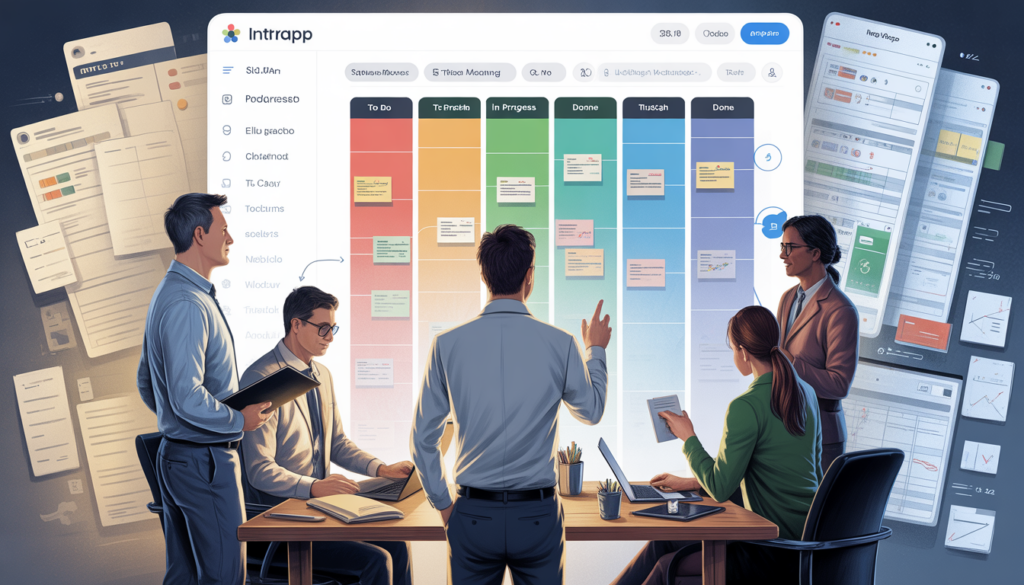
Most SMEs don’t use one system.
They use five. Sometimes eight.
- CRM in one tool
- Project management in another
- Invoicing in a separate system
- File sharing somewhere else
- Internal communication in yet another app
At first glance, this seems flexible and cost-effective.
In reality, it often creates hidden operational costs.
1. Subscription costs add up quickly
One software subscription may cost only €10–€25 per user per month.
That doesn’t seem like much.
But consider this scenario:
- 6 different tools
- a team of 10 employees
- monthly subscriptions for each system
Suddenly the yearly cost can reach thousands of euros.
And that is only the visible part of the cost.
2. Lack of integration is expensive
When systems cannot communicate with each other, companies are forced to rely on manual work.
This often leads to:
- manual data copying between systems
- duplicated data management
- inconsistencies and errors
- valuable time spent on administration
A fragmented software environment slows down everyday operations.
The real cost here is lost productivity.
3. No centralized data control
When multiple tools store business information separately:
- data is scattered across different systems
- it becomes difficult to see the full customer journey
- reporting becomes slower and more complex
- security risks increase
For an SME, business data is one of its most valuable assets.
Without centralized control, this becomes a strategic disadvantage.
4. Systems break during growth
What works for a team of five often fails at fifteen.
As companies grow, they need:
- more advanced permission management
- automation between processes
- larger volumes of data
- more complex workflows
At this point, disconnected tools no longer behave like a system.
They become a collection of limitations.
The real question companies should ask
The question is not simply:
“How much does this software cost?”
The real questions are:
- How much time does the team lose because of fragmented systems?
- How many mistakes are caused by manual processes?
- How transparent is the company’s overall operation?
In many cases, hidden costs exceed subscription fees.
What an integrated system provides
An integrated platform can replace multiple disconnected tools by providing:
- centralized CRM for customer management
- connected project management
- task and workflow management
- internal communication in context
- centralized data control
- automation and scalability
This is not only about convenience.
It is about operational efficiency.
Why IntrApp can be a solution
IntrApp is a modular, integrated business platform built specifically for SMEs.
It helps companies:
- replace multiple separate tools
- reduce administrative work
- manage business data in one unified system
- automate internal processes
- expand functionality as the company grows
Companies do not need to jump immediately into expensive custom development.
But they also do not need to remain stuck with disconnected tools.
If you want to understand the real hidden cost of your current software stack, the first step is often a simple operational audit.