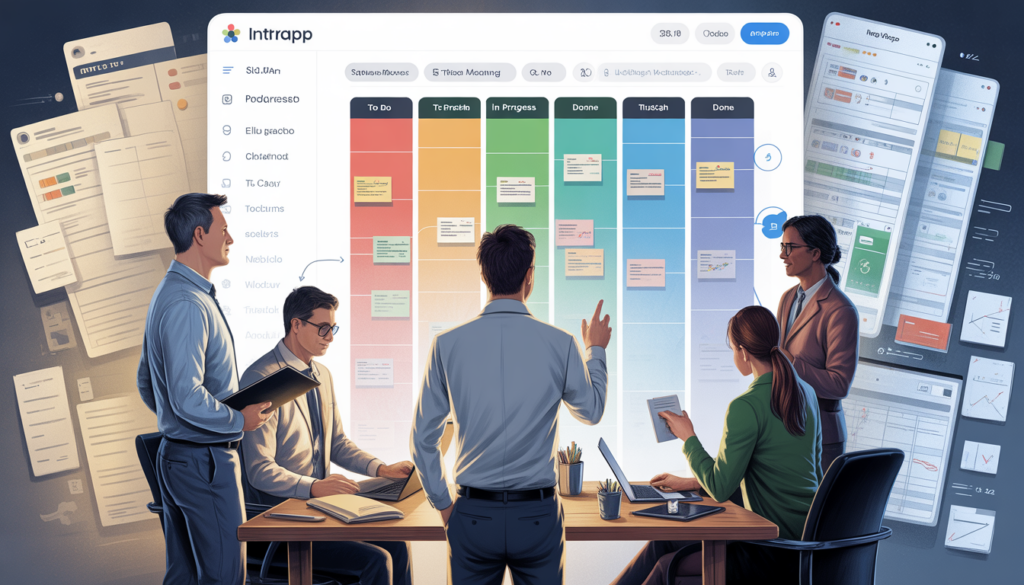

Why digitalization matters for SMEs today and why it is worth approaching it consciously
Digitalization is not a technological trend.
It is a business decision.
Companies that approach it strategically gain efficiency, transparency, and scalability, while those that delay often struggle with fragmented workflows and increasing administrative complexity.
Digitalization is not the future - it is the present
Many small and medium-sized businesses still think about digitalization as a major transformation they will deal with “someday later.”
In reality, digitalization is not a one-time project.
It is a continuous adaptation to an increasingly fast-paced business environment.
Today the question is no longer whether digitalization is necessary.
The real question is how and how quickly companies adopt it.
Customers expect fast responses, teams work on multiple projects simultaneously, and business data grows every day.
Without a structured system that connects these elements, even well-organized teams can quickly lose transparency and efficiency.
What digitalization actually provides for SMEs
Digitalization becomes valuable not because it is “modern,” but because it frees up time, energy, and resources.
A well-designed digital workflow can:
- reduce administrative workload
- make tasks and projects transparent
- improve collaboration within teams
- support better time management and project management practices
- reduce mistakes and misunderstandings
The goal is not to use more productivity tools.
The real goal is to create a connected system where information flows naturally.
Why many companies delay digitalization
Despite its importance, many businesses hesitate to start their digital transformation.
Common reasons include:
- the process seems too complex
- concerns about implementation costs
- uncertainty about the return on investment
- negative experiences with previous systems
However, the biggest risk is not adopting digital systems too early.
The real risk is falling behind while competitors become more efficient.
Manual processes, spreadsheets, and scattered communication eventually become obstacles instead of support tools.
Where IntrApp fits into the picture
Digitalization works best when it does not overcomplicate daily operations.
IntrApp is designed with this principle in mind.
It provides an administrative foundation for SMEs, covering the essential parts of everyday business operations in a single environment.
Instead of using separate systems for CRM, project management, or help desk functions, IntrApp connects these areas through one unified logic.
Within the platform:
- tasks, projects, and communication are connected
- team members can focus on their actual work
- administrative overhead is significantly reduced
Digitalization then becomes a natural evolution of company processes, rather than a disruptive transition.
Conclusion
Digitalization is not primarily a technology issue.
It is a business mindset.
Companies that take action early gain not only efficiency, but also stronger foundations for long-term growth.
The good news is that digital transformation does not need to happen all at once.
Often, all it takes is a stable system that companies can build on over time.