A Digital Workspace Without Structure
Digital tools have become an essential part of how modern organizations function. Teams rely on them for nearly every aspect of their work. From communication and task coordination to document management, scheduling, reporting, and internal knowledge sharing, these tools are everywhere. In theory, they exist to make work smoother, faster, and more structured. But in practice, the way many companies adopt and use them leads to the opposite. Instead of clarity, they create confusion. Instead of flow, they cause friction. This is not because the tools themselves are inherently bad, but because they are not working together as a unified system.
The modern workplace is facing a problem it was not prepared for: fragmentation. What was once seen as digital transformation, the process of adopting a wide range of specialized tools, has gradually turned into a kind of digital sprawl. There are apps for every function, but no clear way to move between them. Files are stored in different systems. Teams use different calendars. Notifications arrive from multiple sources. Knowledge is locked inside isolated tools that do not communicate with each other. All of this adds up to a silent, daily inefficiency that drains attention, time, and motivation.
When Tools Multiply, Structure Disappears
Fragmentation does not arrive all at once. It builds slowly, through individual decisions that seem reasonable in isolation. One department chooses a project management tool that fits their workflow. Another adopts a different calendar system. The HR team selects a platform to handle onboarding and document sharing. A manager downloads a standalone app for internal messaging. Each of these choices is logical in context. However, when there is no overall structure to support them, the digital environment begins to fall apart.
Over time, companies find themselves surrounded by disconnected tools. No one intended to create a fragmented system, but no one prevented it either. There is a tool for everything, yet everything feels scattered. Employees are left to switch constantly between platforms, re-enter data into different systems, and figure out which version of a document is the right one. Tasks become more about navigating tools than completing actual work. This is the hidden cost of adopting solutions without an integrated approach.
The Real Cost of Fragmented Tools
At first, teams may not notice the cost of fragmentation. Most people find temporary workarounds. They learn how to navigate the maze. But those little inefficiencies compound quickly. Minutes are lost switching tabs, looking for files, or syncing updates across apps. Those minutes turn into hours over the course of a week, and multiply across teams, departments, and time zones.
Beyond wasted time, there is a cognitive toll. Switching between tools forces people to constantly reorient themselves. Mental context is lost. Focus is interrupted. Even small tasks become draining when they require effort just to access the right platform or locate information. Frustration grows, especially when people feel they are spending more time managing systems than doing their actual work.
Over a longer period, the damage becomes cultural. Fragmentation leads to disconnection between teams. It becomes harder to access shared knowledge or understand how one project relates to another. Silos grow deeper. Collaboration feels more difficult. Leadership loses visibility, and misalignment spreads. The result is not just inefficiency, but organizational drift. Teams start pulling in different directions, not because of intent, but because the infrastructure no longer supports alignment.
You Don’t Need Fewer Tools. You Need Connection.
Many organizations respond to digital overload by trying to cut back. They remove tools in an effort to simplify. But simplification does not come from having fewer options. It comes from creating a system where everything works together. The real goal is not minimalism, but integration.
An effective digital workplace does not mean relying on a single tool for everything. It means designing an environment where different tools serve different functions, but remain connected through structure, logic, and accessibility. Instead of fragmenting workflows across platforms, it brings them into one clear framework.
This kind of integration does not have to be complex. It can start with aligning interfaces, syncing data between key systems, or simply organizing tools around a shared logic. What matters most is that employees are not forced to constantly switch mental gears or hunt down disconnected information. When tools work together, people can focus on the work itself, not the infrastructure behind it.
Structure Is Not Optional Anymore
As remote and hybrid work have become the norm, the need for a well-structured digital environment has become urgent. Without face-to-face interaction, the digital workspace is no longer just a support system. It is the entire system. If that system is fragmented, then every part of the business suffers.
Structure is now a prerequisite for speed, clarity, and alignment. It allows people to operate with confidence. It reduces unnecessary questions, duplicated efforts, and wasted motion. It also gives leaders the ability to see what is actually happening across teams in real time. Not through endless meetings, but through transparent systems that present information clearly and consistently.
The good news is that structure can be created from what already exists. There is no need to scrap everything. Most companies already have the tools they need. What is missing is the connective tissue. And that begins with intention. Instead of asking which tool is best, the more useful question is how those tools fit together. Instead of reducing what is possible, the better path is to make everything accessible through a common logic that makes sense to the people who use it every day.
From Fragmentation to Flow
Every organization reaches a point where adding more tools no longer helps. That is the moment to stop and reassess. Digital productivity is not about stacking more features or adopting trendier platforms. It is about creating the kind of environment where complexity is reduced, not increased.
When structure returns, flow becomes possible again. Teams move more smoothly. Decisions happen faster. Everyone knows where to go and what to use. And instead of spending their energy navigating a maze of disconnected systems, people finally get to focus on the work that matters most.
A Smarter Way to Work Together
If your organization is already feeling the weight of disconnected systems, you’re not alone. Most companies reach a point where complexity starts to slow everything down. The good news is, you do not have to start over to fix it. You just need to bring structure to what you already have.
That is exactly why we built IntrApp.
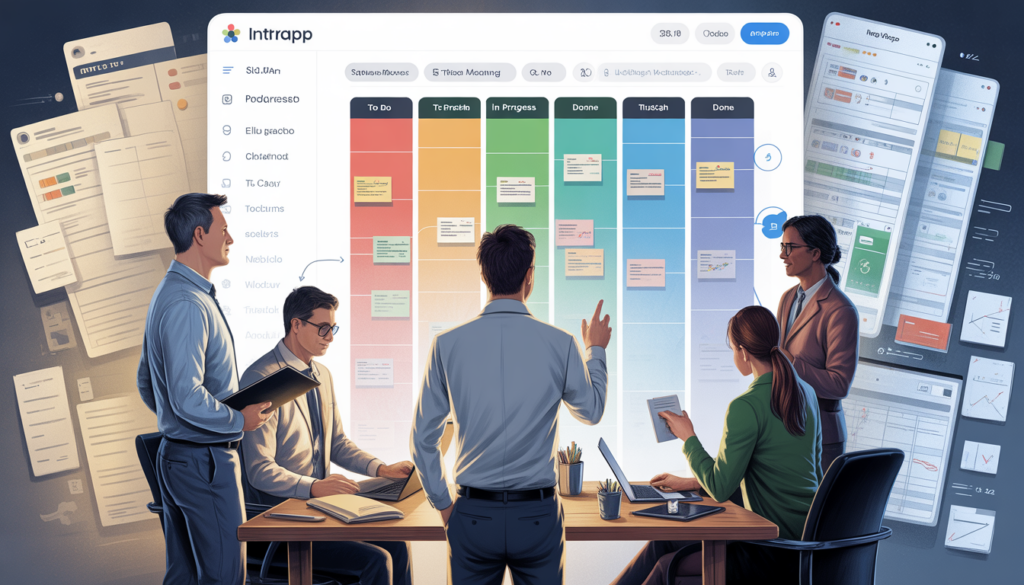
Instead of forcing teams to replace every tool they use, IntrApp provides one unified platform where essential functions come together. Communication, task management, calendars, documentation, knowledge sharing, and more: all accessible in one place, with one logic, and one user experience. No more jumping between apps or chasing scattered information. Just a workspace that finally works the way your teams do.
Because when your tools work together, your people can too.