Why "Working Smarter" Beats "Working Longer"
Productivity isn’t about sitting at your desk for eight hours straight. Instead, it’s about doing meaningful work efficiently, collaboratively, and with motivation. Many people still confuse being busy with being productive, yet the two couldn’t be more different. Real productivity isn’t measured by the number of hours worked but by the value created during those hours.
However, achieving this level of productivity doesn’t happen by accident. It grows in an environment where people feel trusted, supported, and connected. When employees know that their time and ideas matter, they naturally take ownership of their work. As a result, they perform better, communicate more openly, and contribute to shared goals not because they have to, but because they genuinely want to.
At IntrApp, we believe that real team booster activities go far beyond company retreats, games, or one-time workshops. Of course, those activities can strengthen relationships for a while. But lasting motivation comes from what happens every day: how teams plan together, collaborate effectively, and celebrate progress.
That’s why we believe these principles should be part of everyday work culture. Productivity should be visible in how you plan projects, track time effectively, communicate transparently, and recognize effort consistently. When these daily habits align, motivation becomes sustainable, and work becomes genuinely rewarding.
The Foundation of Motivation: Trust Over Control
In many organizations, being productive still means being busy. However, presence does not equal performance. A full calendar or a long workday may look impressive, but if people feel pressured or micromanaged, their creativity and motivation quickly fade. Even the most talented professionals struggle to do their best work when they feel distrusted.
The best leaders understand that trust drives performance. When people are trusted to manage their time and priorities, they feel a sense of ownership and pride in their work. This shift from control to trust transforms how teams function. It encourages accountability, collaboration, and continuous improvement.
Instead of enforcing control, great leaders create clarity. They focus on clear goals, visible workflows, and open communication. When everyone knows what they are doing, why they are doing it, and how success is measured, alignment happens naturally. Teams begin to focus on outcomes rather than hours, which leads to higher productivity and stronger engagement.
The real goal is not to watch your team work harder. It is to help them work smarter. That is why platforms like IntrApp are built to make collaboration transparent, track progress effectively, and support accountability without micromanagement. As a result, teams stay motivated, aligned, and genuinely connected to their purpose.

Planning and Structure: The Backbone of Every Team
Every successful project begins with clarity. Without a clear structure, even the most motivated teams can lose focus and direction. Missed deadlines, duplicated effort, and confusion about ownership often happen not because people don’t care, but because the process itself is unclear. As a result, progress slows down and frustration grows.
That is why planning and structure are essential for sustainable productivity. A well-organized workflow helps everyone understand what needs to be done and when. It also reduces uncertainty and creates a sense of confidence across the team.
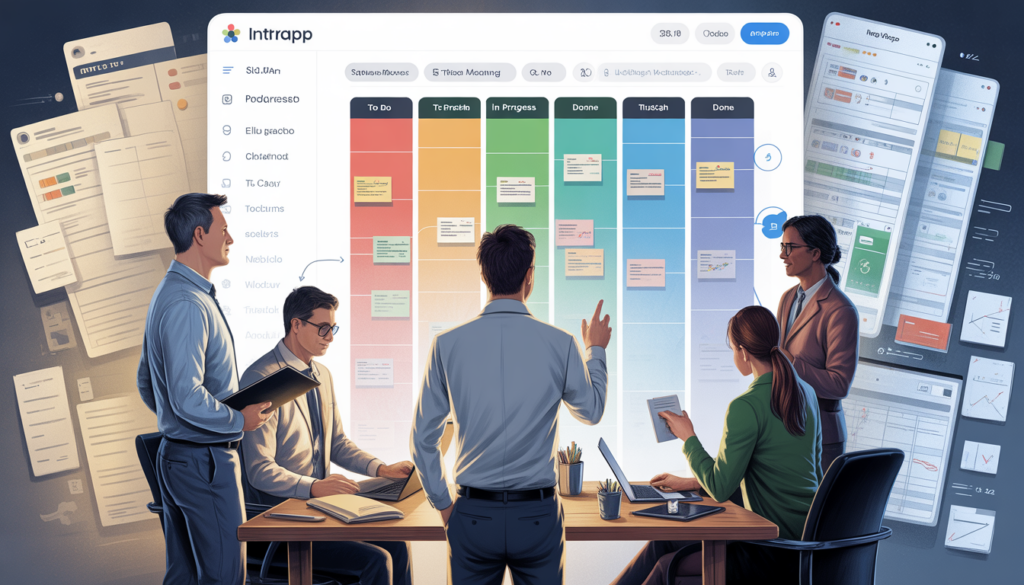
Tools like Kanban boards and task-tracking systems bring order and visibility to complex workflows. Each team member can see their responsibilities, progress, and priorities at a glance, which helps eliminate confusion and unnecessary back-and-forth. For example, when a task moves from “In Progress” to “Done”, everyone instantly knows the project’s current state.
In this way, structure does not limit creativity, it supports it. When teams have a clear plan to follow, they spend less time figuring out what to do next and more time doing meaningful work that drives results.

In IntrApp, structured planning helps teams stay aligned through visual boards and task tracking, so no one gets lost in the process.
At first glance, finishing a task might seem like the end of the job. However, the work is not truly complete until the results are reviewed, tracked, and learned from. Without reflection, teams risk repeating the same mistakes and missing valuable opportunities to improve.
Projects only succeed when outcomes are measured and discussed openly. That is why regular follow-ups and progress reviews are essential parts of any productive workflow. They allow teams to celebrate what went well, address what did not, and build a stronger foundation for the next stage of work.

Equally important is time tracking, not as a tool for surveillance, but as a genuine team booster. When time is logged consistently, it creates transparency and accountability across the team. Everyone gains a shared understanding of how effort is distributed and where adjustments might be needed.
For instance:
- You know where your team’s time goes
- You can see which tasks take more effort than expected
- You can measure productivity without guesswork
As a result, projects become easier to manage, forecast, and invoice accurately. Without proper time tracking, however, teams lose visibility into progress and performance, which makes long-term success nearly impossible to sustain.
That is why IntrApp’s built-in time tracking is designed to help teams stay accountable, bill accurately, and continuously improve. By integrating tracking directly into everyday workflows, teams can focus on results instead of worrying about spreadsheets or manual reports.
Recognition and Feedback: The Real Motivation Multiplier

Motivation thrives on acknowledgment. When people feel that their work is seen and appreciated, their engagement grows naturally. Even small gestures, such as a quick thank-you, a supportive comment, or a public mention during a meeting, can reignite enthusiasm and remind employees that their contributions truly matter.
Furthermore, leaders who consistently recognize achievements help build psychological safety within their teams. This sense of safety allows people to take initiative, share honest feedback, and experiment without fear of being judged. As a result, the workplace becomes a space where individuals feel seen, supported, and valued, not just managed.
Positive feedback also creates a ripple effect. When one person is recognized, it encourages others to do their best as well. Over time, these moments of appreciation shape a culture of collaboration and continuous improvement rather than competition and stress.
Inside IntrApp, feedback and recognition happen in real time. Teams can comment, tag colleagues, or celebrate milestones directly within the platform, keeping motivation alive through ongoing positive feedback loops that strengthen both trust and performance.
Rest and Recharge: Productivity's Hidden Ingredient
No team can sustain high performance without balance. Every brain, no matter how motivated, needs time to rest and recover. Short breaks, casual conversations, or small rituals such as a quick coffee chat, a friendly game of darts, or a short walk outside, all act as mental resets that help people recharge.
In fact, these moments are team booster activities in disguise. They may look simple, yet they play a powerful role in preventing burnout and maintaining energy levels throughout the day. When employees step away for a few minutes, they often return with a clearer mind, new ideas, and stronger focus.
Moreover, when companies treat rest as an essential part of the workflow instead of a guilty pleasure, they create an environment that values sustainability over constant pressure. A well-rested team is not only more creative but also more consistent, motivated, and capable of long-term success.
True productivity is not about squeezing more hours out of the day. It is about creating a rhythm that balances focus with recovery, so performance can thrive naturally.
Open Communication: Giving Every Idea a Voice
Great teams do more than just follow instructions. They collaborate, share ideas, and co-create solutions together. Open communication builds trust, which in turn strengthens creativity and teamwork. When people feel heard, they are more likely to take ownership of their work and contribute meaningfully to the success of the whole organization.
Similarly, a workplace that listens empowers employees to share insights and propose improvements without fear of rejection. This sense of openness helps uncover better solutions, resolve issues faster, and ensure that everyone feels like part of the company’s growth.
When team members know their voices matter, they stop thinking of themselves as simply “working for” the company. Instead, they start building it together. Every suggestion, piece of feedback, or question becomes part of a shared effort to improve.
IntrApp supports this kind of open collaboration through message boards, shared workspaces, and transparent task comments. These tools make it easy to exchange feedback in real time so that communication becomes an integrated part of the workflow, not an afterthought.
Many people underestimate how transformative proper time tracking can be. It is not about monitoring or controlling employees, but about gaining a clear understanding of how effort, workflow, and results connect to each other. When time is tracked transparently, teams can finally see where their energy goes and how their work creates value.
Moreover, transparent time tracking provides insight that helps teams make smarter decisions every day. It allows them to:
- Spot bottlenecks early, before they slow down progress.
- Distribute workload fairly, ensuring that no one feels overwhelmed.
- Improve estimates for future projects, leading to more accurate planning.
- Strengthen trust between teams and clients through clear accountability.
As a result, time tracking brings clarity, and clarity drives motivation. When everyone understands where time is spent and why, work feels more meaningful and productive.
IntrApp integrates time tracking directly into your team’s daily workflow. This means that people can log hours, review progress, and stay aligned with goals without extra tools or unnecessary friction. By keeping everything in one place, IntrApp helps teams stay focused, accountable, and efficient.

The New Meaning of "Team Booster Activities"
Real team booster activities are not limited to playing games or organizing occasional retreats. Instead, they represent a deeper commitment to building a healthy and sustainable work culture. True motivation comes from consistency, clarity, and appreciation: three elements that turn everyday work into a shared purpose.
When a company combines transparent workflows, reliable time tracking, and a culture of open feedback, it lays the foundation for long-term success. These practices do more than just boost productivity; they create an environment where people feel engaged, valued, and empowered to take initiative.
In other words, a team that communicates clearly, tracks its progress transparently, and celebrates its wins regularly becomes more than efficient it becomes self-driven, resilient, and truly collaborative.
At IntrApp, we believe that productivity should feel empowering, not exhausting. That’s why our platform unites planning, time tracking, collaboration, and accountability in one intuitive system designed to simplify work and strengthen team alignment.
When you give your team the structure, clarity, and support they truly deserve, motivation doesn’t need to be forced, it grows naturally from within.t
Try IntrApp free today and experience how organized workflows lead to real teamwork, stronger focus, and lasting success.