
Understanding the Stages of Team Development
Every successful team follows a journey through the stages of team development. It begins with enthusiasm and uncertainty, moves through challenges and disagreements, and eventually reaches alignment and high performance. This natural evolution is what makes teamwork both complex and rewarding.
Understanding each phase of team growth allows leaders to anticipate what their teams need, whether it is direction, clarity, trust, or recognition. Instead of reacting to problems as they arise, leaders who understand these dynamics can guide their teams with confidence and empathy, creating a smoother path toward collaboration and success.
The model of team development stages was first introduced by Dr. Bruce Tuckman, who described the five key phases that every team experiences: Forming, Storming, Norming, Performing, and Adjourning. Although this framework dates back to the 1960s, it remains remarkably relevant in today’s hybrid, fast-changing workplaces.
At IntrApp, we believe that great leadership begins with awareness, by knowing where your team currently stands, recognizing what it needs to grow, and applying the right tools to support that growth. When you understand the dynamics behind your team’s behavior, you can transform everyday collaboration into long-term performance.

The 5 Stages of Team Development
1. Forming – Getting Started Together
This is the stage where everything feels new and slightly uncertain. Team members are polite and careful, trying to understand expectations, their place in the group, and how others prefer to work. There is excitement in the air, but also hesitation, because no one wants to make a wrong move.
The leader’s role in this phase is to bring clarity and direction. People need to know what they are working toward and how their contribution fits into the bigger picture. Explaining the mission clearly, defining responsibilities, and encouraging open conversation all help create a sense of belonging and security.
Trust does not appear instantly; it grows through structure and consistency. A good leader makes sure that every person feels seen and supported, not just assigned to a task. When communication is clear and expectations are shared, teams can move forward with confidence instead of confusion.
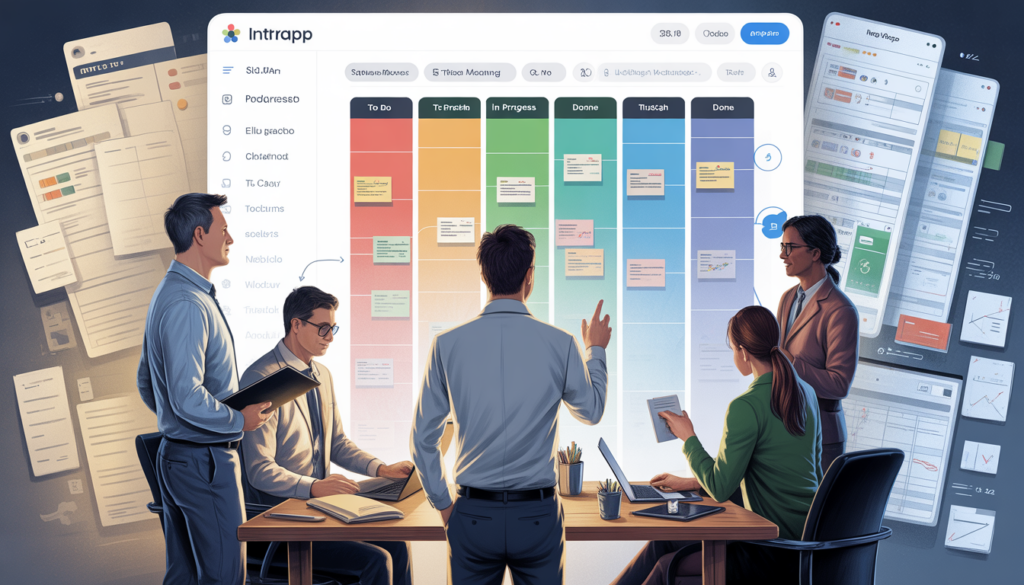
Tools like IntrApp’s project boards and structured onboarding workflows make this process easier. New members can see ongoing work, understand priorities, and align their efforts with the rest of the team. Clear visibility reduces misunderstandings and builds momentum from day one.
2. Storming: Navigating Conflicts and Roles
As people begin to collaborate, differences start to appear. Team members bring their own habits, opinions, and working styles, and those differences can easily cause tension. Frustrations may arise around unclear goals, uneven workloads, or conflicting priorities. What once felt exciting in the forming stage can suddenly feel uncertain and this is the point where true leadership is tested.
A great leader does not ignore conflict. They listen carefully, ask questions, and help people express their perspectives in a respectful way. When disagreements are handled openly, they lead to better understanding instead of resentment. Conflict, when guided properly, becomes a signal that the team is learning to work authentically together.
The key in this stage is to focus on clarity rather than control. Encourage transparent communication, set up regular follow-ups, and make sure everyone knows how decisions are made. When people feel heard, they are far more likely to stay engaged and motivated. The goal in the storming phase is not to avoid tension, but to turn it into progress.
With tools like IntrApp’s message boards and task follow-ups, leaders can keep conversations visible and constructive. Challenges become easier to manage when everyone can see updates, responsibilities, and next steps in one place.
This marks one of the most important stages of team development, where communication shapes collaboration.
3. Norming: Building Trust and Alignment
Once the initial turbulence settles, the team begins to breathe more easily. People understand each other’s strengths, communication becomes smoother, and the sense of uncertainty starts to fade. Trust begins to grow naturally as the group learns how to collaborate with less friction and more confidence.
At this stage, the leader’s role shifts from problem-solving to culture-building. It is the perfect moment to strengthen team identity by celebrating progress, recognizing contributions, and encouraging honest feedback. These actions remind everyone that they are moving forward together, not just completing individual tasks.
Consistency is what holds this stage together. When goals, workflows, and responsibilities remain clear, teams can maintain momentum even when new challenges appear. Leaders who continue to communicate openly and show appreciation build a foundation of respect that lasts well beyond a single project.
IntrApp supports this phase by providing shared workspaces where collaboration happens naturally. Teams can share updates, exchange feedback, and celebrate small wins without needing endless meetings. With everything visible in one place, people stay aligned and motivated while the sense of teamwork continues to deepen.
4. Performing: Reaching High Productivity
In this phase, the team has found its rhythm. People understand their roles, their strengths, and how their work connects to shared goals. Communication flows easily, decisions are made faster, and collaboration feels effortless. The energy once spent on finding alignment is now used to deliver results.
Leaders at this stage no longer need to direct every move. Their focus shifts from managing to empowering. The best leaders act as coaches who remove obstacles, provide guidance when needed, and trust their teams to take ownership of their work. When trust and clarity meet, performance naturally rises.

This is also the point where measurement becomes essential. Time tracking and data-driven follow-ups help teams reflect on how they work and identify ways to improve without creating pressure or control. Instead of micromanagement, leaders use insights to recognize effort, balance workloads, and celebrate efficiency.
When a team reaches this level of maturity, leadership becomes more about maintaining balance than enforcing rules. It is about nurturing autonomy, encouraging innovation, and continuously optimizing how work gets done.
With IntrApp, teams in the performing stage can track progress, review results, and stay accountable in one place. The system supports independence while keeping everyone connected to the same goals.
This is the ultimate goal in every stage of team development: building trust and independence.

5. Adjourning: Reflecting and Moving Forward

The final stage arrives when a project or collaboration cycle comes to an end. The team looks back on what they have achieved, reviews the lessons learned, and prepares to take on new challenges. This is not just the end of a project; it is a moment of reflection and growth.
In this phase, the leader’s role is to create space for closure and gratitude. Taking time to recognize individual and team contributions helps people feel valued and appreciated. It also reinforces a sense of purpose that carries forward into future work. Reflection meetings, feedback sessions, or simple thank-you messages can all have a lasting impact.
Celebrating success is not a formality; it is an investment in motivation. When achievements are acknowledged, people are more likely to bring that same energy and commitment to the next project. By closing the loop properly, teams preserve what worked well and learn from what did not.
With IntrApp’s feedback tools and message boards, leaders can guide teams through this stage with confidence. They can collect reflections, highlight milestones, and share appreciation across the team. This ensures that every contribution is visible and that the end of one project becomes the foundation for the next success.
Supporting Each Stage of Team Development with the Right Tools
Each stage of team development requires a unique type of support. When leaders understand what their teams need at every step, they can provide the right structure to help them grow effectively.
In the Forming stage, clarity is everything. Teams are just starting to work together, so clear communication and well-defined goals set the foundation for success. Tools like project templates and Kanban boards in IntrApp help new members understand priorities and stay focused from day one.
During the Storming stage, transparency becomes critical. As opinions and working styles clash, message boards and structured follow-ups help transform potential conflict into productive dialogue. Visibility and open communication keep everyone aligned and reduce unnecessary tension.
In the Norming phase, feedback strengthens collaboration. This is the moment when real teamwork begins to take shape. Leaders can use real-time comments, progress updates, and public recognition to maintain momentum and keep motivation high.
The Performing stage thrives on accountability. When teams reach a level of independence, time tracking and performance insights help sustain high standards without micromanagement. Tracking progress becomes a way to celebrate achievements, not control behavior.
Finally, during the Adjourning phase, recognition matters most. Wrapping up projects with shared reflections, feedback summaries, and small celebrations ensures that every contribution is valued. Ending well creates a positive mindset that carries forward into future collaborations.
When these elements become a natural part of your workflow, leadership stops being about control. It becomes about creating an environment where teams can grow, adapt, and perform naturally.
Real-World Example: Turning Chaos into Collaboration
Imagine a marketing team struggling to coordinate multiple campaigns at once. Tasks overlap, deadlines slip, and communication begins to break down. Team members start feeling frustrated and unsure about who owns which part of the project. Meetings become longer, yet decisions remain unclear. This is the classic Storming stage, where confusion and stress can easily take over.
The team leader realizes that the problem is not effort but structure. Everyone is working hard, yet no one has a clear overview of priorities or progress. To solve this, the leader introduces IntrApp’s Kanban boards and time tracking features. Suddenly, the entire workflow becomes visible. Tasks are organized by status, responsibilities are transparent, and follow-ups happen automatically.
With better visibility, the team starts identifying blockers early and redistributing work fairly. Progress meetings become shorter because everyone already knows what has been done and what is next. Instead of reacting to problems, the team can focus on delivering results.
Within a few weeks, the atmosphere changes completely. Team members begin to trust each other, collaboration improves, and productivity rises. What was once a disorganized group now operates with confidence and independence. The team has successfully moved from Storming to Performing, a true transformation driven by clarity and the right tools.

Why Understanding the Stages of Team Growth Matters for Leaders
Leaders who understand where their team stands can lead with empathy and precision. Instead of pushing for constant productivity, they create an environment where motivation grows naturally. This approach turns leadership into guidance rather than control.
When you understand the stages of team development, you gain the ability to adapt your leadership style as your team evolves. Early on, you might need to offer direction and structure. Later, your role becomes more about trust, coaching, and empowerment. Recognizing these shifts helps you lead each phase with confidence and awareness.
True leadership is not about managing tasks. It is about developing people and helping them realize their potential together. Great leaders do not just build teams. They guide transformation, turning individual effort into collective achievement.
Conclusion: Lead with Clarity and Connection
Every successful team follows a journey that begins with trust and grows into purpose. By understanding the stages of team development, leaders can bring clarity, strengthen motivation, and support lasting growth.
At IntrApp, we help teams move through every phase of that journey with tools that build structure, encourage transparency, and make accountability simple. When people have clarity and connection, productivity becomes a natural result, not a forced goal.
Try IntrApp free today and guide your team from forming to performing in a smarter, more sustainable way.