Productivity and workflows
It is Friday afternoon. The office is quietening down, but you have a blank spreadsheet open on your screen. You need to know how the week went, what got...
You open the task list on a Tuesday morning, and the screen is a wall of red text. Out of twenty active items, fifteen carry a tag that says "urgent", "critical", or "ASAP". When the team sits down with their coffee to start the shift, they do not look at the board to see what is most important for the company. They look at the board to guess who they need to pacify first.
When a manager refuses to decide whether task A or task B is more important, they mark both as urgent. The intention is to guarantee that both get done quickly. The actual result is that the manager transfers the responsibility of prioritisation to the employees. The team is left to figure out the sequence on their own, and they will not base their decision on revenue, strategy, or long-term business goals. They will base it on immediate pressure.
An urgent tag is supposed to act like a fire alarm. It signals that normal procedures must stop because an exceptional threat has appeared. If the fire alarm rings continuously from Monday to Friday, people stop evacuating the building. They just put on their headphones and try to work through the noise.
This is exactly what happens to your task list. When every single client request, internal memo, and minor correction is labelled as a top priority, the label loses its meaning entirely. The system breaks down because prioritisation is not about stating what is important. Prioritisation is the act of stating what will not get done today.
Management often uses the urgent tag to avoid conflict. Telling a colleague or a client that their request is valid but will have to wait until next week requires a difficult conversation. It is much easier to promise immediate action and attach a red flag to the ticket. However, time is finite. You cannot fit twelve hours of focused work into an eight-hour day, regardless of how many red flags you use.
Because the official system provides no actual guidance on what to do next, the team has to invent their own system to survive the day. The official list becomes a graveyard of equally critical tasks, and reality is dictated by completely different rules.
When the board offers no clear sequence, employees will naturally protect themselves from immediate stress. They will take the task whose owner calls the most frequently.
Imagine a team member sitting down to work on a major contract. This contract represents the revenue for the entire next month, and it requires three hours of uninterrupted focus. Ten minutes into the work, the phone rings. It is the client who always calls. They have found a minor formatting error on a small delivery from last week, and they want it fixed right now.
The team member knows exactly how this plays out. If they ignore the request and stick to the major contract, this client will call three more times before lunch, send two emails, and eventually complain to the director. To avoid the harassment, the employee puts the major contract away, opens the old file, and spends forty minutes fixing the minor issue.
The loud client gets served. The quiet, high-value client waits.
This happens multiple times a day across the entire office. Strategic work stalls for weeks not because the work is too difficult, but because it is constantly interrupted by minor, loudly demanded fixes. The company ends up rewarding bad behaviour. Clients learn that if they shout or call repeatedly, they jump the queue. The team learns that the only way to avoid being shouted at is to drop everything and serve the noise. The actual value of the task no longer matters.
The loudest voice is not always an external client. Very often, it is the owner or the operations manager.
You hold a planning meeting on Monday morning. The entire team spends an hour discussing the workload, and everyone agrees on the sequence of deliveries for the week. The plan is documented. Then, at half past ten on Tuesday, the company director walks down the hallway. They just got off the phone with a partner, they have a new idea, and they want to see if it is viable. They stop at a developer's desk and ask them to look into it quickly.
Alternatively, this happens in a private chat group. A message arrives on WhatsApp from the boss, asking for a quick data export or a minor adjustment to a campaign.
The employee stops what they are doing. They cannot say no to the owner of the company. They will not point out that this new request contradicts the Monday morning plan, because the request came directly from the top. They put the official work on hold and start working on the private request.
The director does not intend to derail the week. They simply want to get an idea out of their head and hand it over to someone else. But because the request bypasses the official task list, it acts as an invisible override. By Wednesday afternoon, the official plan is entirely fiction. The team is working exclusively on the tasks that arrived through private messages, hallway conversations, and direct phone calls. The official board still shows the original plan, but nobody is looking at it anymore.
The toll this takes on the staff is visible. Look at the office at five o'clock in the afternoon. The team is exhausted. They have been typing furiously, answering calls, apologising to clients, and putting out fires since nine in the morning. They have worked hard.
But if you sit down and ask them what they actually finished, the answer is nothing.
The major proposal is still sitting in a draft folder. The monthly invoices have not been sent out. The strategic review of the new product line has not even been opened. The team is drained from the constant context switching, but they have not closed a single task that actually brings in revenue or moves the company forward.
Every time a person switches from a complex task to a sudden interruption, their brain has to abandon the current context and load a new one. When they try to return to the original task, it takes them fifteen minutes just to figure out where they left off. If you interrupt them four times an hour, they spend their entire day loading and unloading contexts without actually doing the work.
This is the hidden cost of the "everything is urgent" culture. You are paying full salaries for a team that spends half its day recovering from interruptions. They go home feeling defeated because they know they worked all day but achieved nothing of substance, and they know tomorrow will be exactly the same.
You cannot fix this with a new rule about how to use chat applications, and you cannot fix it by simply telling people to focus more. You need a structural boundary that forces the company to confront reality. You need a system that does not allow two things to occupy the number one spot at the same time.
IntrApp is the Business Operating System the company runs on. It is not a CRM and not an ERP. IntrApp covers what a small or mid-sized company does day to day, without the complexity. If you are looking for the deepest tool in one specific area, you will find better elsewhere, and that is fine. This is a deliberate decision, not a flaw.
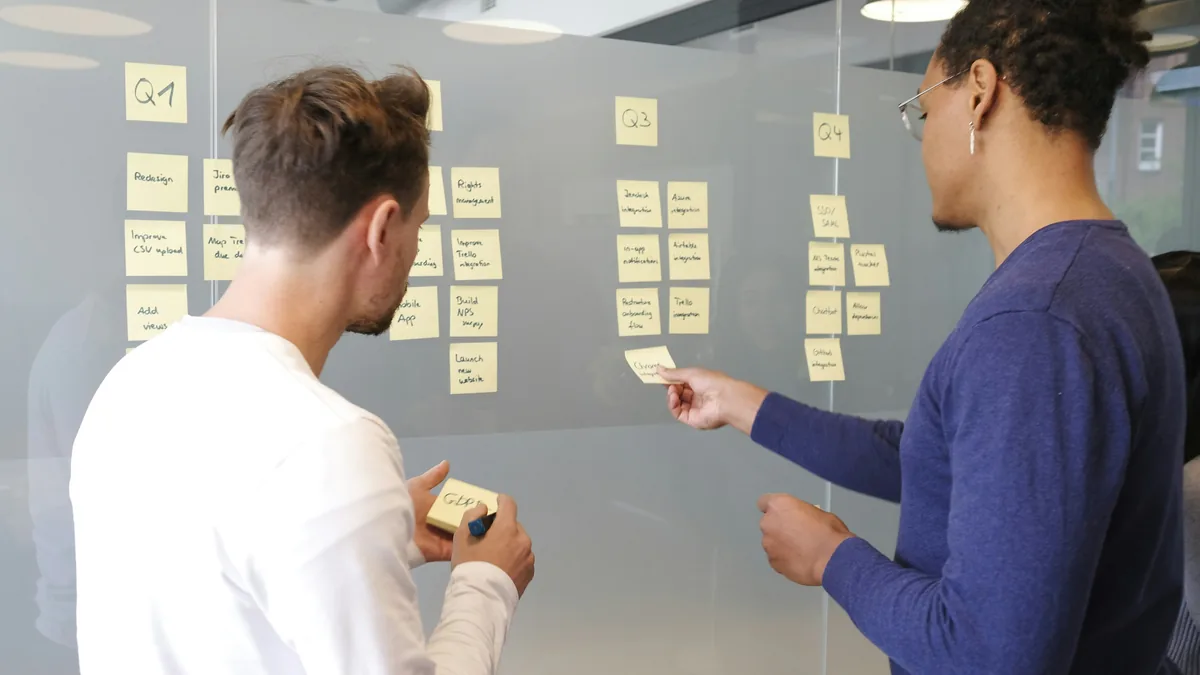
The value of IntrApp is that it forces a single sequence. When the work lives on a shared board, everyone sees the real order of execution. If the director walks down the hallway with a new idea, the team can point to the board and ask what should be pushed down to make room for it. It makes the cost of the interruption visible immediately. You cannot hide the delay in a private message.
You can start alone. We do not bill you for implementation or training. The automated setup takes about 30 minutes, and you are live. If you still want help, our expert team is happy to assist, and that is your decision.
The system adapts to how you actually operate. If a feature you need is missing, you can ask for it. If roughly three quarters of our customers would use it, we build it for free and it goes into the common product. What remains below the threshold is built on a separate track, for a fee, while you continue to receive the shared updates. The industry expertise belongs to you, the development belongs to us, and the two work together seamlessly.
When you remove the fake urgent tags and put the work in a strict vertical order, the noise stops. The team no longer has to guess what to do, and the loudest client loses their power to disrupt the day.
Tomorrow morning, before your team starts work, put your ten most important tasks into the system, in strict order from one to ten. Tell the team they are only allowed to work on the item at the top, and they cannot touch the second until the first is done. If the system does not bring immediate calm to your office, you can cancel it just like a streaming subscription.
If this topic is useful to you, these are good ones to read next.
Productivity and workflows
It is Friday afternoon. The office is quietening down, but you have a blank spreadsheet open on your screen. You need to know how the week went, what got...
Productivity and workflows
You sit down at your desk on a Tuesday morning, and your calendar is already a solid block of colour. There is a quick sync at nine, a project update at...
Productivity and workflows
A board is worth having when there is a point in the week where somebody waits for somebody else. What keeps one alive, and when you do not need one at all.
The demo shows an invented company with all its data filled in, and it needs no sign-up. A few features are switched off in it, and it resets every night.