
Digitalisation and efficiency
You sit at your desk on a Tuesday morning and approve the second monthly invoice for your new software. You open a new tab, log into the dashboard, and look...
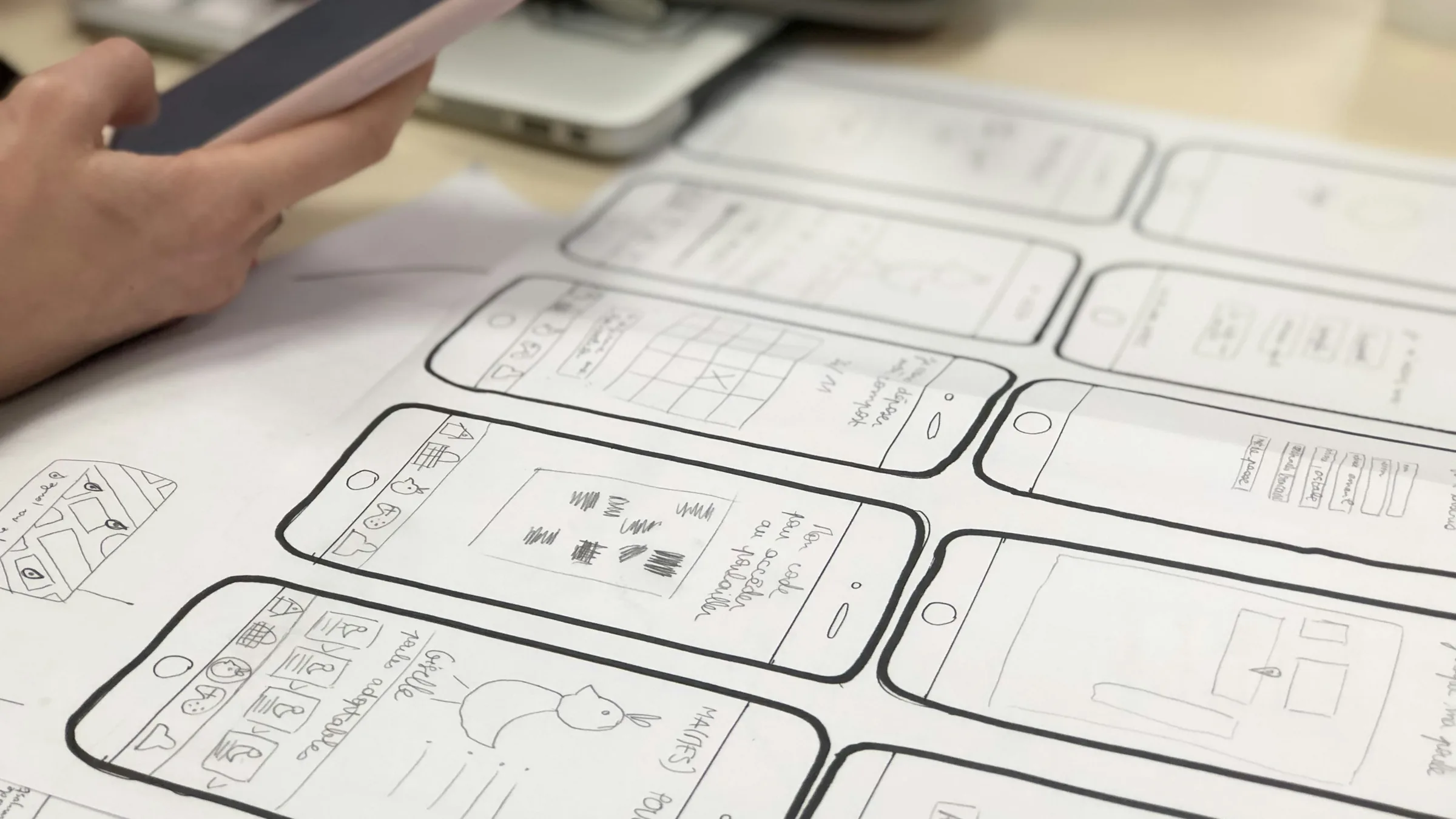
Picture two companies with the same plan. Both want to replace manual status tracking. The first one sits down, writes a specification, commits the budget for six months, and sees the first working version half a year later. The second one builds the narrowest usable version in three weeks, hands it to the sales team, and within a week learns that two of the planned statuses are unnecessary and one is missing.
Both companies got it wrong. The difference is that one found out after three weeks and the other after six months. The money was not lost on being wrong. It was lost on the time during which nobody knew they were wrong.
Every development project is an investment, and the real question is not how much it costs but whether it delivers a return. The LEAN mindset, MVP thinking and agile development keep that question open. The work stays controlled and measurable because there is always a near point where you can stop and check the direction.
Six months is not just elapsed time. Everything around the project moves while it passes.
The specification was written when the sales team was two people. By the time the system is ready there are four, and a new pricing rule has been introduced that the development work knows nothing about. For six months the team kept working the old way, so their habits hardened, and the new interface now feels foreign by comparison. The person who wrote the plan has moved on or is focused elsewhere, so the reasoning behind the decisions is no longer in anyone's head.
The most expensive item, though, is none of those. It is that after six months, backing out is hard. Nobody who has invested half a year says the project should not have happened. They patch it, extend it, add to it. A wrong direction does not get closed down. It turns into a maintenance line item.
The core principle of LEAN fits in one sentence. Minimize unnecessary features, maximize business value.
In practice that means making a few uncomfortable calls. Features that might be useful “someday” are left out, even when somebody cares about them, because the work goes to the problem that hurts now. Development moves in short cycles, so there is always a near point where you can stop and check the direction. The goal is not to increase complexity but to eliminate wasted work, and wasted work is whatever turns out at the end to be used by nobody.
An MVP (Minimum Viable Product) is the simplest possible working version of a solution.
It is not a compromise and not an unfinished product. It is a testable, business-validatable solution that is quick to deploy, quick to produce feedback, and cheap to be wrong about, because there is little in it to lose. It shows whether a development idea actually creates value before significant resources go into it.
Cutting scope is not about lowering quality. Fewer features exist so that somebody real starts using the thing sooner and can tell you what is missing.
If the work is driven by a regulatory deadline, there is nothing to validate. The requirement is fixed, the details are not open to judgement, and a partial version does not satisfy it. The same holds when a single step of a process cannot be left out without making the whole thing pointless. Warehouse intake that cannot record an item is not a reduced version. It is unusable.
The third case is the uncomfortable one. If the users are external customers rather than your own team, a half-finished version does not produce feedback. It produces lost customers. Experimenting on internal users is cheap, because they tell you what is wrong. A customer does not tell you. A customer just leaves.
An MVP is a tool for learning faster, not a rule. Where there is nothing to learn, there is nothing to speed up.
The point of agile development is that the plan is not a contract. It is the best information available today. Work moves in short stretches, priorities get re-ranked at the end of each one, and feedback does not go into the next project. It goes into the next two weeks.
For a smaller company this matters more, because operations change quickly. One large new customer, one colleague leaving, or one supplier change can reorder the priorities within weeks. Delivering a plan agreed six months ago is not discipline. It is working from old information.
Before starting any development project, decide what it will be measured on. How much time it saves, whether it reduces administrative work, whether it cuts the number of errors, whether it improves transparency, and whether it increases revenue or conversion.
ROI is not only a financial metric. Time saved, tighter control and fewer errors are measurable business value too.
There is one thing that has to be done before development starts, because it cannot be done afterwards. Write down where you are today. How many minutes it takes to put together a quote, how many times someone has to ask a follow-up question on an order, how many hours a week go into collecting data for a report. Without that baseline there is nothing to compare against later, and everyone will describe the return the way they feel about it.
Many companies hesitate to start development projects because they believe every part has to be built individually. Permissions and roles, activity logging, file management, data security, notifications, customer, project and task management, and the ability to trace afterwards what happened and when.
None of that is what makes one company different from another. Those parts are basic infrastructure, and they have to do roughly the same job everywhere.
Rebuilding them from scratch every time raises both the cost and the risk. They also consume the early weeks, which pushes the answer to the only question that matters, whether the direction is right, months into the future.
When building your own is worth it, and when starting from something ready-made is the better move, is a separate article.
IntrApp already includes most of that list. Roles and permissions, detailed activity logging, file and document storage, customer and data management, project and task management and internal communication are all in there. Development therefore does not start at the foundations. It starts where the company is actually different from every other company.
IntrApp is not a CRM and not an ERP, and not another program added to the end of the queue. It is the Business Operating System the company runs on, so those items are not separate tools inside it but views of the same operation. That is what makes it a starting point rather than one more thing to integrate.
Say a company wants custom status tracking with automated notifications. Permissions, logging and file handling are already there, so none of that is where the work begins. What is left is the business logic that is specific to them, and for the first round even that can be narrowed to the basic status flow.
From there the order is the same as on any MVP. The internal team uses it live, the time freed up and the drop in errors can be measured, and the next version starts from that. The gain is not in the price of the development. It is in how early you find out whether the direction was right.
Because the system is modular, there is no need to introduce everything at once. Start with one area, run it live for a few weeks, then decide what comes next. That way the rollout itself is made of small steps rather than one large switch after which half the company has to relearn everything at the same time. The first weeks are therefore more about leaving things switched off than switching things on, which is a separate article.
The goal of development is not to have more features. The goal is to create more business value.
IntrApp is not a development project that starts from scratch. It is a stable foundation that lets companies build faster, with more control and measurable results. What is still missing is not a dead end. You can request a feature, and if roughly three quarters of our customers would use it too, we build it for free. Whether a request falls into that group is our call, because we are the ones who see the whole customer base.
Do not spend resources unnecessarily. Build only what truly moves your team and your business forward, and build it so that if you were wrong, you find out as early as possible.
Updated: 25 August 2026
If this topic is useful to you, these are good ones to read next.
Digitalisation and efficiency
You sit at your desk on a Tuesday morning and approve the second monthly invoice for your new software. You open a new tab, log into the dashboard, and look...
Digitalisation and efficiency
Three months in there is something to look back at. A year in you can see what repeats. Two years in the company becomes transferable.
Digitalisation and efficiency
The bar for what counts as normal has moved, and not because anyone fell behind. It sits in four places, all of them outside your company.
The demo shows an invented company with all its data filled in, and it needs no sign-up. A few features are switched off in it, and it resets every night.