
Team leadership
You close the office door to finally review the quarterly numbers in peace. Three minutes later, a colleague knocks to ask if they can spend forty euros on...

On Monday morning a colleague sends the client the material that another colleague already sent on Friday. The client writes back politely to say they have it, twice.
Three days earlier the team spent a whole day team-building. It went well, people laughed, and it turned out the bookkeeper used to play football.
The two have nothing to do with each other, and that is the point. A good atmosphere and working together are two different things. They are easy to confuse, because they tend to go wrong at the same time.
When a team is struggling to move, the most common answer is more work. Staying later, meeting more often, checking in more frequently.

That works briefly and then backfires. More does not get finished because people work longer. It gets finished because less of the day goes on starting over, asking around, and doing the same thing twice. A leader who misses that ends up running a team that works hard and delivers little.
This sounds dull, and it is still the thing that pays the most. Everything else starts here, because until it is settled what “done” means, there is nothing to make visible and nothing to look back at.
Most misunderstandings come from two people using the same word for two different things. To one of them, “done” means they have written it. To the other, it means somebody reviewed it and it went out to the client. As long as nobody says this out loud, both are convinced the other one understands.
It does not take a policy. It takes going through three or four recurring types of work once and agreeing where each one leaves your desk.
Not for the sake of monitoring. So that nobody has to ask.
If someone has to ask a colleague whether the quote has gone out yet, the answer is always slightly old, because it describes where things stood the last time that colleague looked. For a single question that does not matter. When the information has to be topped up that way several times a day, part of the team is permanently deciding on yesterday's picture.
What makes this work is not the tool. It is an agreement. The state of a piece of work gets written down by whoever is doing it, not by whoever is asking. That is a small difference, and it decides whether the board carries information or reports. When the manager fills it in on other people's behalf, the team reads it as exactly what it looks like, which is a check-up.
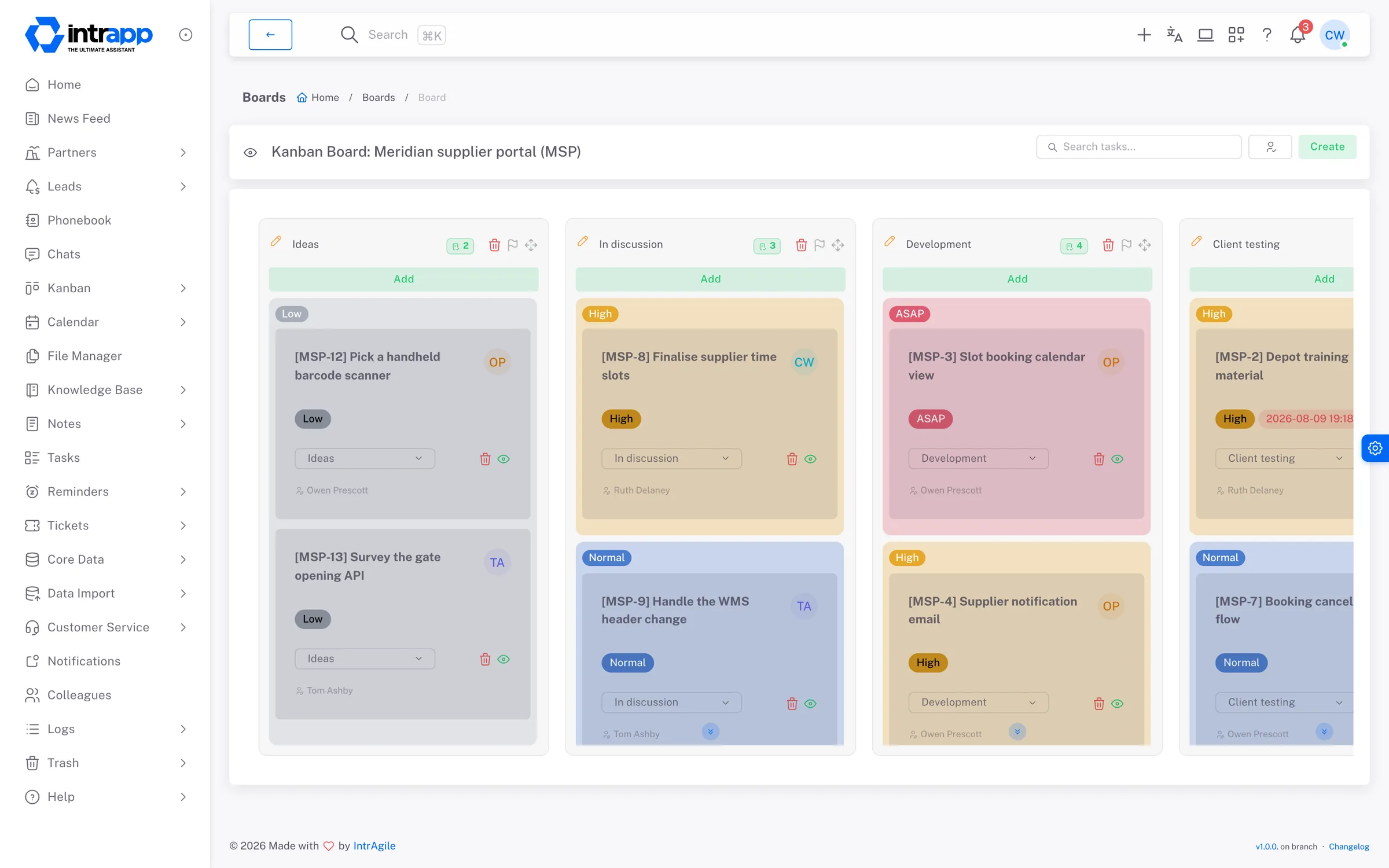
In most teams a finished task disappears. Nobody looks back at it, because the next one has already arrived, and because a week later only impressions remain, not what actually happened.
That is how the same mistake happens three times and looks new each time. This does not call for a long retrospective. It calls for a short look back at how it went, what the hard part was, and what you would do differently. If that half hour is regular, it does more than stop the mistake repeating. It also shows who has too much on their plate.
“Good work, team” is not recognition. It is politeness. Everyone who hears it knows it is not about them. You can only be specific if you know what happened, and that is what those short reviews leave behind.

What lands is naming what somebody did and what came of it. The quote went out on time because someone sorted it out on Friday evening. The client stayed because someone called before they had a reason to complain. One sentence said in front of others beats an annual review.
In a lot of places, time tracking is never introduced because the team experiences it as surveillance. Often with good reason, because that is also what it gets used for.
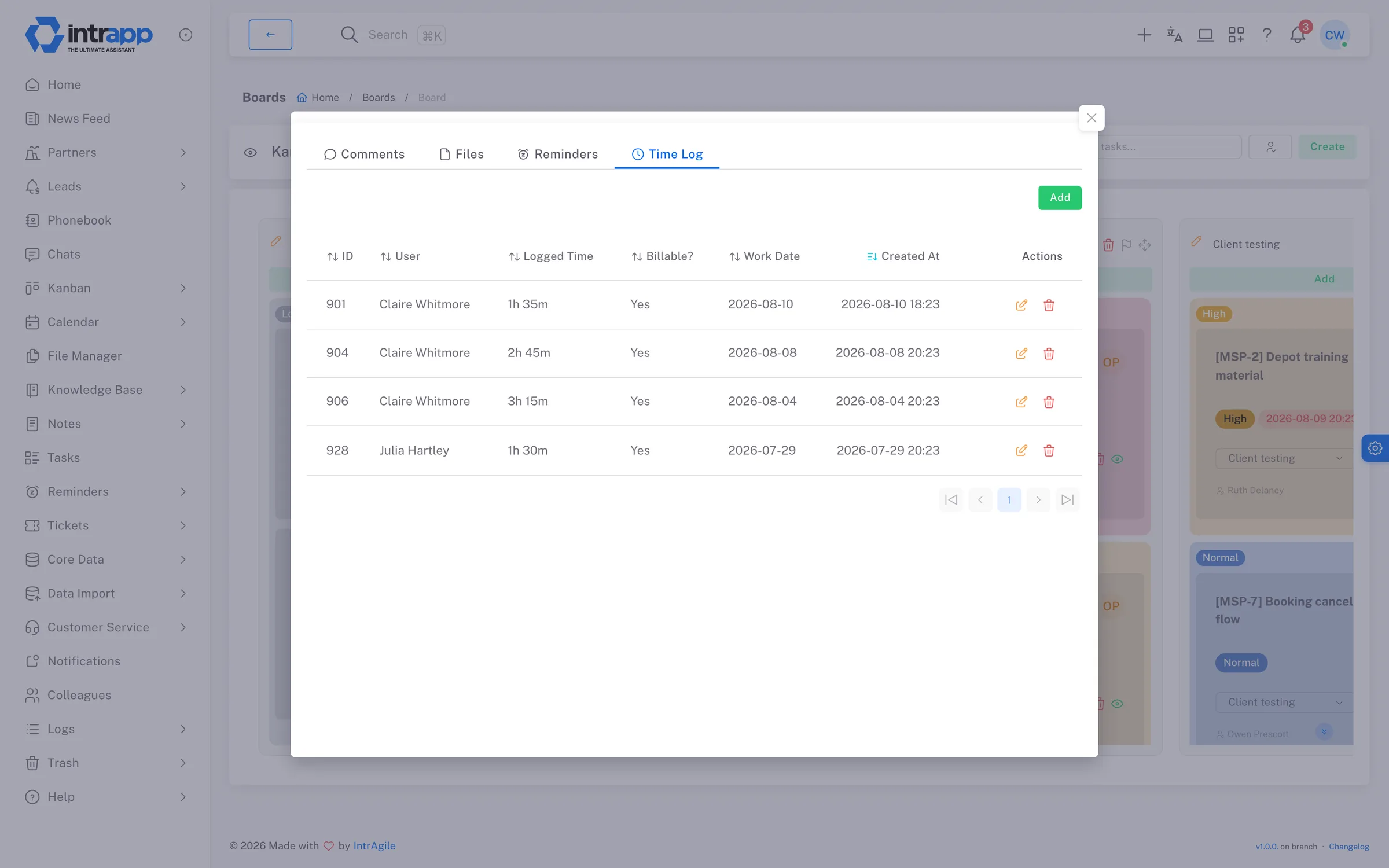
The same data is what lets you defend people. If it is visible how much went into a client, that becomes a conversation with the client rather than with your colleague. If one type of work always takes twice what anyone plans for it, the estimate was wrong, not the person doing it.
The difference comes down to one question, which is whether you use it outwards or inwards. A team that sees the data standing on its side will keep it accurately by itself. A team that sees it collected for the next dressing down will keep it badly, and then it is good for nothing.
Not every team-building exercise is pointless, but most of them are not for what they are used for.
Doing something together is genuinely useful when people do not know each other. In a new team, or where three people work remotely, a shared lunch does more than any process diagram. That is a real benefit, worth the afternoon.
Why a newly assembled team needs different leadership from one that has worked together for years is a separate article.
What it cannot do is repair what broke on Monday. If two people are not working together because nobody decided whose client it is, cooking together will not fix that. At best it postpones the conversation that should have happened instead.
These practices share one condition, because they are worth something only when the work can be handed over. Where it cannot, only the form of them is left.
In a two-person workshop where you are both working on the same piece, there is nothing to make visible. The work is lying on the table, and anyone who looks at it sees where it stands. In a group that has worked together for years, a new rule replaces something that works with something that has to be learned.
The turning point is not headcount. It is the day somebody tells a client something wrong in good faith, because the newest information was not with them. Until then, the best organisational decision is not to organise.
Half of these practices are about making work visible, so that it shows who took what on, what is stuck, how much went into it, and what was decided. None of that strictly requires software. Past a certain point, though, the agreement alone is not enough, because what gets written down needs one shared place where everyone sees the same thing.
IntrApp is one such place. It is not a CRM and not an ERP. It is the Business Operating System a company runs on. The customer sits next to the task, and the conversation sits next to the decision. The trust is not something it will build for you. That part stays your job.
Updated: 25 August 2026
If this topic is useful to you, these are good ones to read next.
Team leadership
You close the office door to finally review the quarterly numbers in peace. Three minutes later, a colleague knocks to ask if they can spend forty euros on...
Team leadership
Every team goes through the same stages. Knowing which one you are in tells you what kind of leadership the next few weeks need.
Productivity and workflows
You open the task list on a Tuesday morning, and the screen is a wall of red text. Out of twenty active items, fifteen carry a tag that says "urgent",...
The demo shows an invented company with all its data filled in, and it needs no sign-up. A few features are switched off in it, and it resets every night.