Systems and tools
Walk into the main office of an installation company on a Tuesday morning, and you will see a large screen on the wall displaying the daily schedule. The...

There is a moment most company owners recognise. A quote goes out, and three days later somebody notices it had last year's price in it.
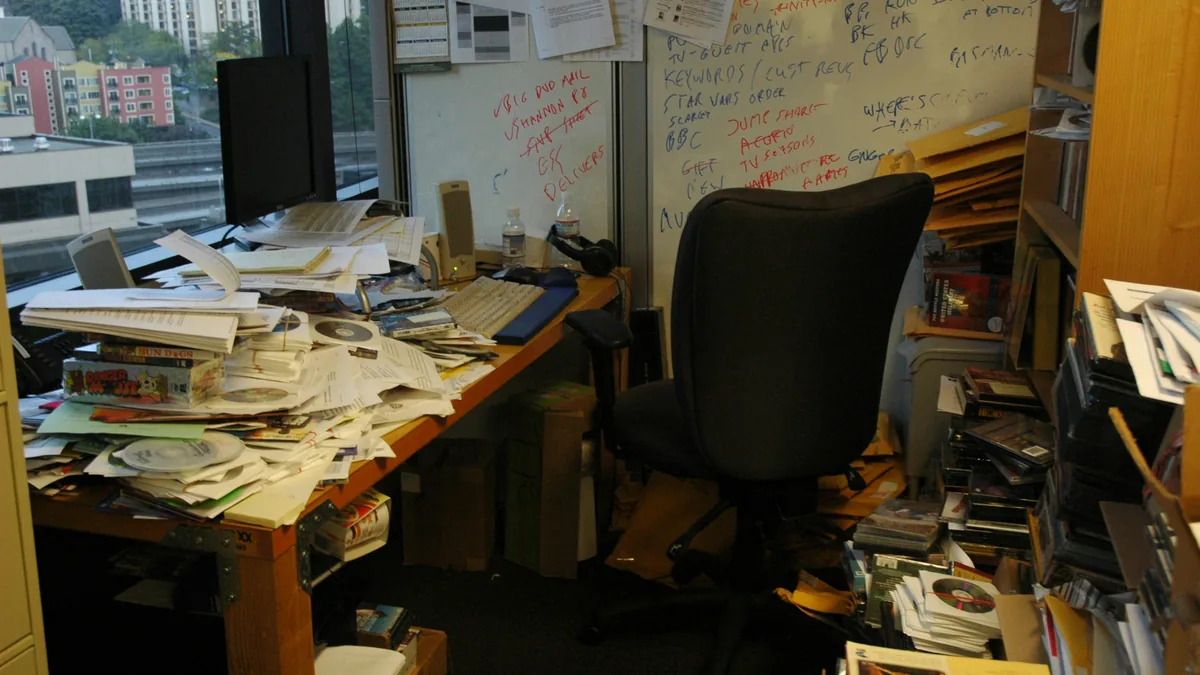
Nobody made a big mistake. Two people opened the same file, one saved, the other overwrote, and the good version stayed on somebody's laptop. This usually gets filed under carelessness. It was not carelessness. It was that the work lives in four places, and there is no road between the four. Each of those four places came from a good decision, because projects needed somewhere to live, files needed a shared home, and the calendar arrived after two colleagues promised the same slot twice.
Ask a new colleague to put something somewhere and you will hear the real structure of the company.
Where do I record that the client agreed to the later deadline. In the project, where the deadline is. In the client record, where the conversation is. In the group chat, where the person who agreed to it will actually see it. All three answers are defensible, which means the honest answer is that it depends on who you ask.
So it goes into the place that person prefers, and it is correct there. Two weeks later somebody looks in one of the other two places and finds an older truth, correctly recorded, in the place they were told to trust.
This is not a discipline problem, and writing a rule about it does not fix it, because the rule has to be remembered by everyone at the exact moment they are in a hurry. It is a structural problem, because the same fact belongs to three tools, so it belongs to none of them.
Once this has been going on long enough, people quietly opt out of it. If there is a file on your own machine called final_v3 because you no longer trust the one on the shared drive, then the shared copy has already stopped being the record. Nobody has said so out loud yet.
The price of this is easy to miss because you never have to pay it in one go. It leaves in pieces small enough that no single one of them is worth complaining about.
Somebody checks which version is the current one. Somebody types the same number into the place the monthly overview is built from. Somebody asks a colleague rather than looking it up, because asking is faster. When a client calls, three screens have to be open before anyone can say where things stand with them. None of these takes more than a couple of minutes.
The more expensive item is not the time, though. It is the attention. Someone working on a quote who switches to another screen to check what was promised to that client last week does not come back to where they left off. They have to rebuild in their head where they were. Those few minutes appear in no report, and they are exactly why the day can feel the way it does, as though you worked hard and finished very little.
There is also a version of this that costs nothing on a good day and a great deal on a bad one. When the same fact is tracked in two places, both of them are usually right. The morning they disagree, the disagreement is not found by a system. It is found by a client.
It is not always a problem, and anyone who says otherwise is selling something.
If the work never leaves the hands that started it, there is nothing to hand over. Someone who takes a job from the first phone call to the final delivery is only ever searching their own desk, and that is fast. Some trades work exactly like that, and there scatter stays an inconvenience rather than a cost.
The same goes for anything you rarely need. If a detail has to be pulled out of two places once a month, those two minutes are cheaper than any change you could make. Not every slow thing is worth fixing.
Scatter starts to cost something when more than one person works on the same thing, when work is handed from one person to the next, and when someone has to remember what happened months ago. From then on, every handover begins with somebody looking for something.
The obvious move at this point is to reduce the number of tools. Why that does not work is a subject of its own, because the count was never what made them fail to add up. What this costs in money, from subscriptions to double entry, has its own article too, and if some of those tools were built in-house years ago, that is a third story.
What makes work fast is that the task carries the client it belongs to, the decision carries the conversation it came from, and the deadline carries the person who accepted it. Nothing has to be found, because nothing was separated in the first place.
Specialized software is very deep. In any one area it can do things most companies will never need, and most of that depth is neither understood nor used by most of the people in front of it. So depth is not where the value is. Breadth and clarity are.
IntrApp is not a CRM and it is not an ERP. It is the Business Operating System your company runs on, holding the work, the client and the decision under one logic. That is why there is nothing to assemble when a client calls.
Finding out is cheap. The automated setup takes around thirty minutes and then you are live, with your own data in it.
That quote has already gone out with last year's price on it. The question is whether the next one also takes three days to surface.
Updated: 25 August 2026
If this topic is useful to you, these are good ones to read next.
Systems and tools
Walk into the main office of an installation company on a Tuesday morning, and you will see a large screen on the wall displaying the daily schedule. The...
Systems and tools
Your company already runs on something. Not a CRM and not an ERP, but the system your work, your customers and your decisions actually run on.
Systems and tools
Five signs, and none of them depends on which software you run. Plus the three situations that look exactly like this but are not.
The demo shows an invented company with all its data filled in, and it needs no sign-up. A few features are switched off in it, and it resets every night.