Systems and tools
Walk into the main office of an installation company on a Tuesday morning, and you will see a large screen on the wall displaying the daily schedule. The...
Every company already runs on something. The question is not whether you have a system. It is whether the thing holding your operations together has a name, or lives in one colleague's head.
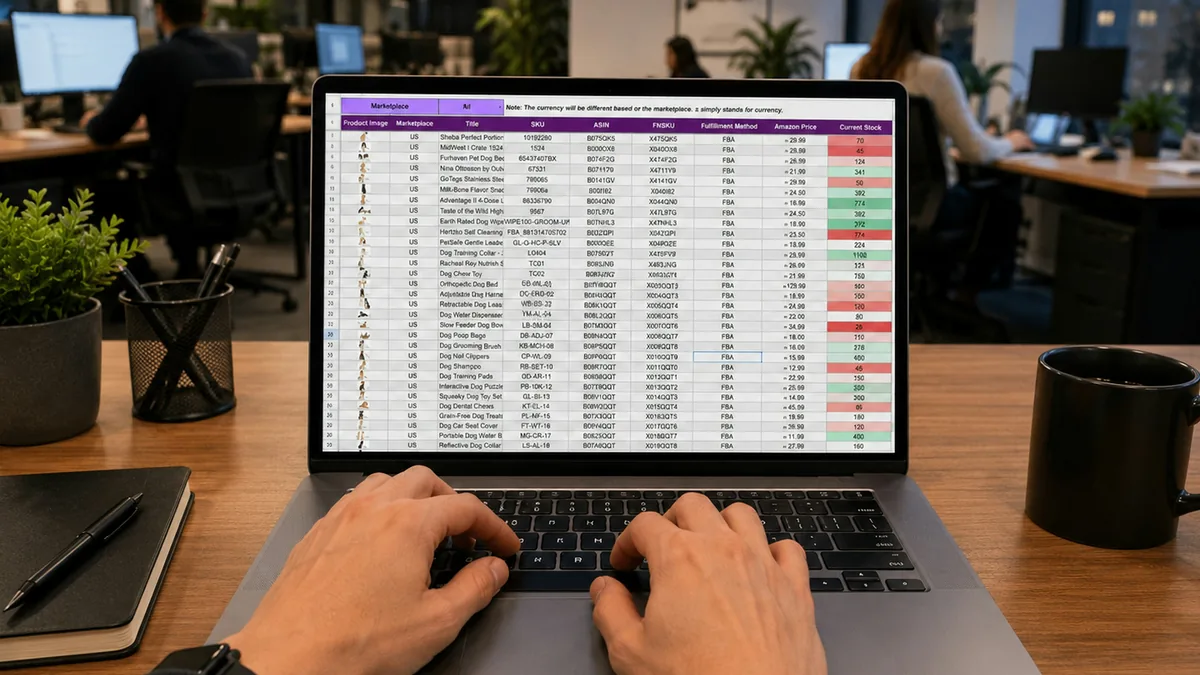
The difference between the two is that the second one cannot be handed over. Yesterday's phone call is with them, the task that came out of it sits in a different tool, the quote that went out sits in a third, and nothing connects the three except the fact that they remember all of it. For as long as they are away, the company answers every question of that kind more slowly.
The request tends to get phrased at that point, and almost always in the same shape, which is that we need a CRM. Nobody starts a tool selection with a feature list, though. You first decide what to compare it to, and from that moment the category does your thinking for you. It tells you who the alternatives are, what price to expect, and above all what you will call a gap.
Someone shopping for a CRM will call it a gap when there is no sales pipeline. Someone shopping for an ERP will call it a gap when there is no stock movement. The same software, with exactly the same capabilities, scores differently on two different shelves, and neither review is lying. They are answering different questions.
This is why a product has to name its category out loud instead of dancing around it. On the wrong shelf, even the right answer looks wrong.
IntrApp is not a CRM and it is not an ERP. It is a Business Operating System, the base your company runs on, where the task, the customer it belongs to and the conversation about it come into being together, instead of in separate tools to be matched up afterwards.
A CRM carries the customer relationship, and it goes deep there. An ERP carries resources and processes, and it goes deep there. Neither is a bad decision. Neither was built so that the whole week of an eight-person company could fit inside it, from a meeting note to a support ticket to Friday's decision.
Here is the situation everyone recognises. A client calls to ask what happened to last week's material.
While the client record sits in one tool and the task sits in another, answering means opening two places and holding the link between them in your head. The client waits on the line while you do it. When both live in the same system, the client's name has the task under it, the task has the comment your colleague left on it, and the file that was sent is attached to the same thread.
The second situation surfaces more slowly and costs more. Somebody promises a client something for Thursday, then goes on leave. Their colleagues find out that a promise exists on Thursday afternoon, when the client asks about it. The promise was never a secret. It simply was not anywhere, because it sat in a sent email that two people read.
When the promise belongs to the same client record as the task and the conversation, nobody has to know about it in advance. You open the client and it is there, with its date on it. This is the kind of mistake carelessness does not cause. What causes it is knowledge landing somewhere other than where it will be looked for.
The difference, then, is not the number of clicks. It is that you no longer need to know in advance where to look. In the second week of a new hire's job, that single property is worth more than any feature on the list.
The cost of the old way is not search time either. It is interruption. A question asked of a colleague who was doing something else spends two people's attention instead of one. A few times a day, and nobody can say at six where the day went.
Purpose-built software genuinely is deep. Most of that depth, though, is neither understood nor used by most of the people who own it. At the moment of choosing a category, that unused part is exactly what sells the product, because a longer feature list feels like the safer decision.
Six months later, most of the menu has still never been opened. Depth is not the value. Understanding what you use is, across the whole of what your week is made of.
IntrApp covers what a small or mid-sized company does day to day, without the complexity. If you are looking for the deepest possible tool in one specific area, you will find something better than us, and that is how it should be. That is not a gap. It is a decision.
If there are two of you and your entire client list fits in a spreadsheet you both know by heart, there is nothing to connect. The spreadsheet is the right answer, not a sign of falling behind.
If you already have one tool that genuinely works and everything else is a small helper around it, there is nothing to replace either. Switching costs time and attention, and that price pays off only when the current setup costs you something daily. If it merely annoys you once a month, wait.
The tipping point is usually not the work getting slower. It is finding out where the work stands getting slower. We wrote separately about why several tools together still do not add up to a system.
No system covers everything a company does, so the question is never whether there is a gap. The question is what happens to it.
You can request a feature. If roughly three quarters of our customers would use it too, we build it for free and everyone gets it. The judgement is ours, because we see the whole customer base, and what we promise is not immediate delivery, but that a widely useful request enters development. Anything specific to your company alone is built on its own branch, and the shared updates keep arriving meanwhile.
Rollout is where this normally stalls, because outside help is needed and outside help has a price.
You do not need us. The automated install takes about thirty minutes, after which you are live, and we do not bill for implementation or training. If something is unclear, the built-in tour and the manual explain it. If you would rather hear it from a person, our expert team is glad to help, but that is your call, not a condition.
The remaining risk is the risk of any subscription, so you try it, and if it does not suit you, you cancel.
Updated: 25 August 2026
If this topic is useful to you, these are good ones to read next.
Systems and tools
Walk into the main office of an installation company on a Tuesday morning, and you will see a large screen on the wall displaying the daily schedule. The...
Systems and tools
Five signs, and none of them depends on which software you run. Plus the three situations that look exactly like this but are not.
Systems and tools
Excel is a precise tool for calculation, but not for keeping records. Four concrete limits of the spreadsheet, and what to move out of it first.
The demo shows an invented company with all its data filled in, and it needs no sign-up. A few features are switched off in it, and it resets every night.